
NC Agriculture Withstands the Test of Time
Farming in North Carolina dates back to approximately 8000 to 1000 BCE, when Native Americans established small, seasonal farming camps along fertile floodplains. As villages developed into permanent settlements, farms expanded and were cultivated by hand using stone and bone tools. By the time English settlers arrived, Native communities had already established productive agricultural systems centered on corn, beans, and squash, crops that the colonists quickly adopted.
Unlike neighboring Virginia and South Carolina, where large plantations developed around cash crops, North Carolina's sandy Coastal Plain soils made large-scale plantation agriculture less practical during the colonial period. Instead, the colony became a leading producer of tar, which is used in British shipbuilding. This industry ultimately earned North Carolina the nickname "The Tar Heel State."
During the Antebellum period, agriculture throughout the American South increasingly became dependent on the labor of enslaved peoples. Cotton production expanded rapidly, and tobacco became one of the state's most valuable crops. Bright-leaf tobacco curing techniques developed in the Piedmont transformed tobacco production and significantly increased yields. Following emancipation, however, the agricultural labor system was unraveled. Tenant farming and sharecropping emerged as common arrangements that allowed both landowners and farmers to continue producing crops despite widespread economic hardship.

To address these challenges and improve agricultural productivity, North Carolina established the Department of Agriculture in 1877 to provide research, education, and centralized support for farmers. A decade later, the North Carolina College of Agriculture and Mechanic Arts, now NC State University, was founded as the state's land-grant institution to advance agricultural science and education. In 1891, the General Assembly established the Agricultural and Mechanical College for the Colored Race, now NC A&T State University, expanding agricultural education opportunities. Together, these institutions helped modernize farming practices across the state.
By the early twentieth century, research from these institutions was being adopted on farms throughout North Carolina. Crop rotation, deeper plowing, improved seed selection, and better fertilizer use became increasingly common, leading to higher productivity. Even so, tenant farming remained widespread. According to the 1920 Census, 33 percent of white farmers and 71 percent of Black farmers worked as tenants. Mechanization also began reshaping agriculture. The introduction of the Farmall row-crop tractor in 1924 dramatically improved efficiency and reduced the labor required to cultivate fields.
By the middle of the twentieth century, tractors had become standard equipment on many farms. Hybrid seeds, synthetic fertilizers, and improved farming techniques substantially increased yields of corn, tobacco, wheat, cotton, and soybeans. At its peak, North Carolina supported more than 301,000 farms. As machinery replaced much of the manual labor previously required, many rural workers left agriculture for manufacturing jobs in the state's growing textile and furniture industries.
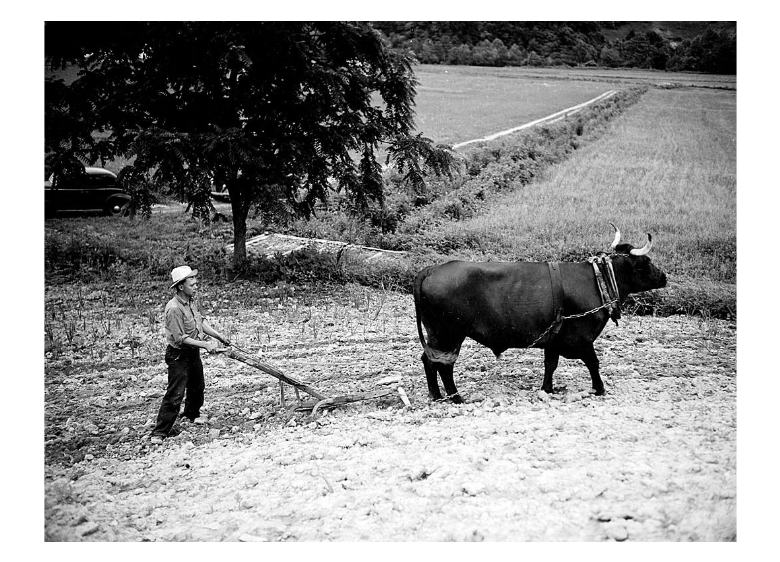
By 2000, the number of farms had fallen below 60,000, with the state continuing to lose roughly 2,000 farms each year. Despite this decline, livestock production, particularly hogs and poultry, remained strong. The 2004 federal tobacco buyout accelerated consolidation among tobacco growers and encouraged many producers to diversify into other crops. Agriculture also entered a new era of technological advancement. Yield monitors, GPS-guided equipment, drones for crop scouting, automated irrigation systems, and variable-rate fertilizer application improved efficiency while increasing yields.
Today, agriculture and agribusiness employ approximately one in five North Carolinians and remain a cornerstone of the state's economy. Poultry is North Carolina's most valuable agricultural commodity, and the state ranks first in the nation for sweetpotato production. Hogs, soybeans, tobacco, cotton, and greenhouse and nursery products also make significant contributions to the agricultural economy. Much of the state's agricultural workforce now depends on migrant labor and workers participating in the H-2A temporary agricultural visa program.
***Images courtesy of the NC Digital Collections


Comments